By Khristian Rueda · 15 May 2026
Jamón Ibérico provenance is only a slogan if the buyer cannot explain the land behind it. Extremadura is the land. The dehesa is not just a scenic pasture. It is a working ecosystem that shapes flavour, fat structure, and the whole story of why Ibérico ham belongs on serious Irish menus. La Dehesa curates the region because the landscape explains the product better than any generic sales copy can.
The dehesa: the context
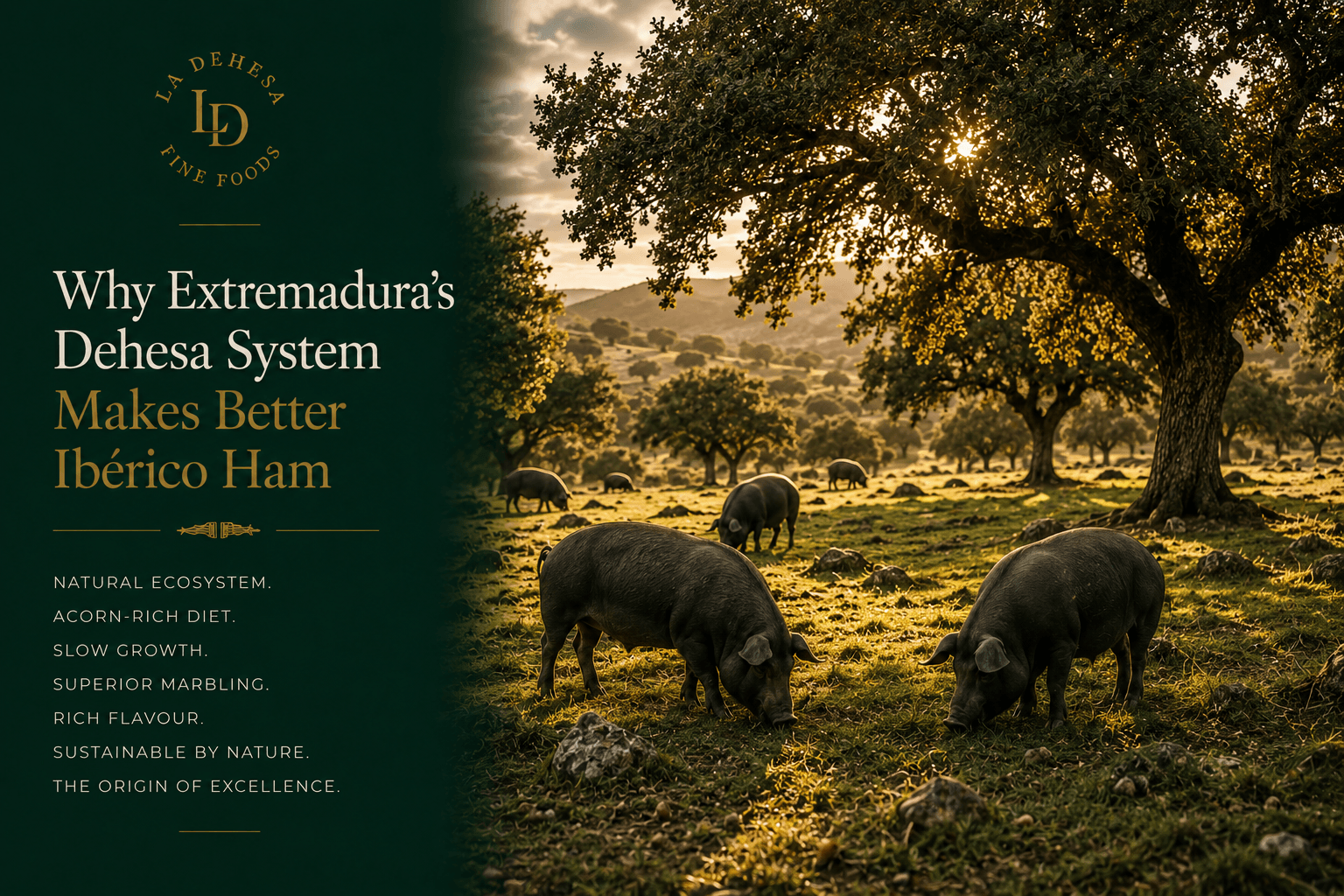
The dehesa of Extremadura is a silvo-pastoral system built around holm oak and cork oak, open pasture, and low-density grazing. In autumn, acorns fall into a landscape that has been managed this way for centuries. Ibérico pigs roam through that environment, moving between grass, roots, and mast. The result is not just a romantic image. It is a specific feeding pattern that changes the flavour and fat profile of the cured ham.
Climate matters too. Extremadura has hot summers, cool nights, and the kind of seasonal rhythm that supports slow curing. Airflow, temperature variation, and patience all matter in the drying and ageing stages. The region is not trying to produce a fast, standardised product. It is producing a ham that carries the memory of woodland, exercise, and time. That is what gives the best pieces their depth and their long finish.
For Irish buyers, the value lies in the narrative as much as the eating quality. A chef can tell a guest that the ham comes from an open oak landscape and that the pigs are raised in a system where the terrain itself shapes the final product. That is a powerful menu story because it is true, specific, and easy for staff to repeat. It is the kind of provenance language that builds trust without feeling theatrical.
The producers
The makers behind great Jamón Ibérico de Bellota work with time, salt, and air rather than speed. The hams are salted, rested, and moved through drying rooms and cellars where conditions are watched closely over many months. The craft is in knowing when a piece needs patience and when it is ready to move. Good producers understand that the dehesa story is incomplete unless the curing house respects it all the way to the finish.
La Dehesa sources from makers who treat the ham as a regional expression, not a marketing novelty. That means proper classification, careful ageing, and an approach that values texture as much as aroma. We are curating the pieces that hold together on a board, slice cleanly for service, and leave the buyer with a product that can carry the table story on its own.
Why Ibérico Belongs on Every Serious Menu
Jamón Ibérico is one of the clearest menu upgrades a venue can make because it does not need much help. A few slices can anchor a board, lift a snack offering, or give the start of a meal a serious tone. In trade terms, it is a storytelling ingredient. Staff can explain the region, the acorn-fed system, and the curing without needing a long script. Guests understand immediately that they are being served something with geography behind it.
It also works because it performs across formats. Fine dining, wine bars, delis, and premium retail counters can all use it differently without losing the story. That flexibility matters in Ireland, where buyers often want products that do more than one job. La Dehesa supplies the ham as a curated origin, not just a SKU.
What to look for
Look for the bellota grade, the ibérico classification, and the curing language. The label should tell you enough to distinguish acorn-fed bellota from lower grades. Good ham will have fine marbling, a supple texture, and an aroma that feels nutty and persistent rather than just salty. The fat should melt, not sit heavy. If the piece seems one-dimensional, the provenance or the cure has not been handled with enough care.
Buy with the menu in mind. A board piece, a slicing piece, and a retail pack may all need different formats. What does not change is the need for a buyer who knows how to read the region and the label. That is the service La Dehesa provides to Irish trade buyers who want a single place to start.
What to Look for in the Ham
For Irish buyers, the dehesa story is useful because it gives the ham a landscape that the team can actually explain. That matters more than most menus admit. A guest does not need a textbook. They need a clear sense of where the flavour comes from, why the fat behaves the way it does, and why the ham deserves a place on the board rather than sitting among generic cured meats.
The practical side is slicing and pacing. Great ham is wasted if it is cut too thick, served too cold, or left to sit until the texture dulls. The product should be handled like a premium live item, even though it is cured. That means calm service, a clean knife, and a team that knows how to present the story without overdoing it.
The buying question is not just which ham tastes best. It is which ham will strengthen the whole range. Bellota gives you a premium anchor, but it also gives you a language for the rest of the cured meat offer. That is why La Dehesa curates it carefully for the Irish market.
- Serve at the right temperature and slice thinly.
- Use the dehesa story as the first line, not the last.
- Keep bellota separate from lower grades so the category stays clear.
Buyer close
The dehesa story gives Irish buyers a clean reason to care about provenance. It ties the ham to land, feed, and cure in a way that is easy to explain and hard to fake. That is what makes the category valuable on a serious board or in a premium deli range.
La Dehesa uses that clarity to separate bellota from the rest of the field. The buyer gets the story, the staff get the script, and the guest gets a product that tastes like it belongs to a specific place.
- Keep the classification visible.
- Slice and serve with care.
- Use the landscape story to support the menu.
Related reading
La Dehesa supplies Jamón Ibérico de Bellota directly to Irish restaurants and retailers. Request a sample or wholesale price list: hello@ladehesa.com
Trade Enquiries
Get the La Dehesa brochure
Tell us your venue type and receive the current product range.
Browse the full range of Origin Verified Spanish products on the products page, or learn about our sourcing approach on the about page. Find out why Irish hospitality partners choose La Dehesa on why us.
Interested in listing these products at your venue?