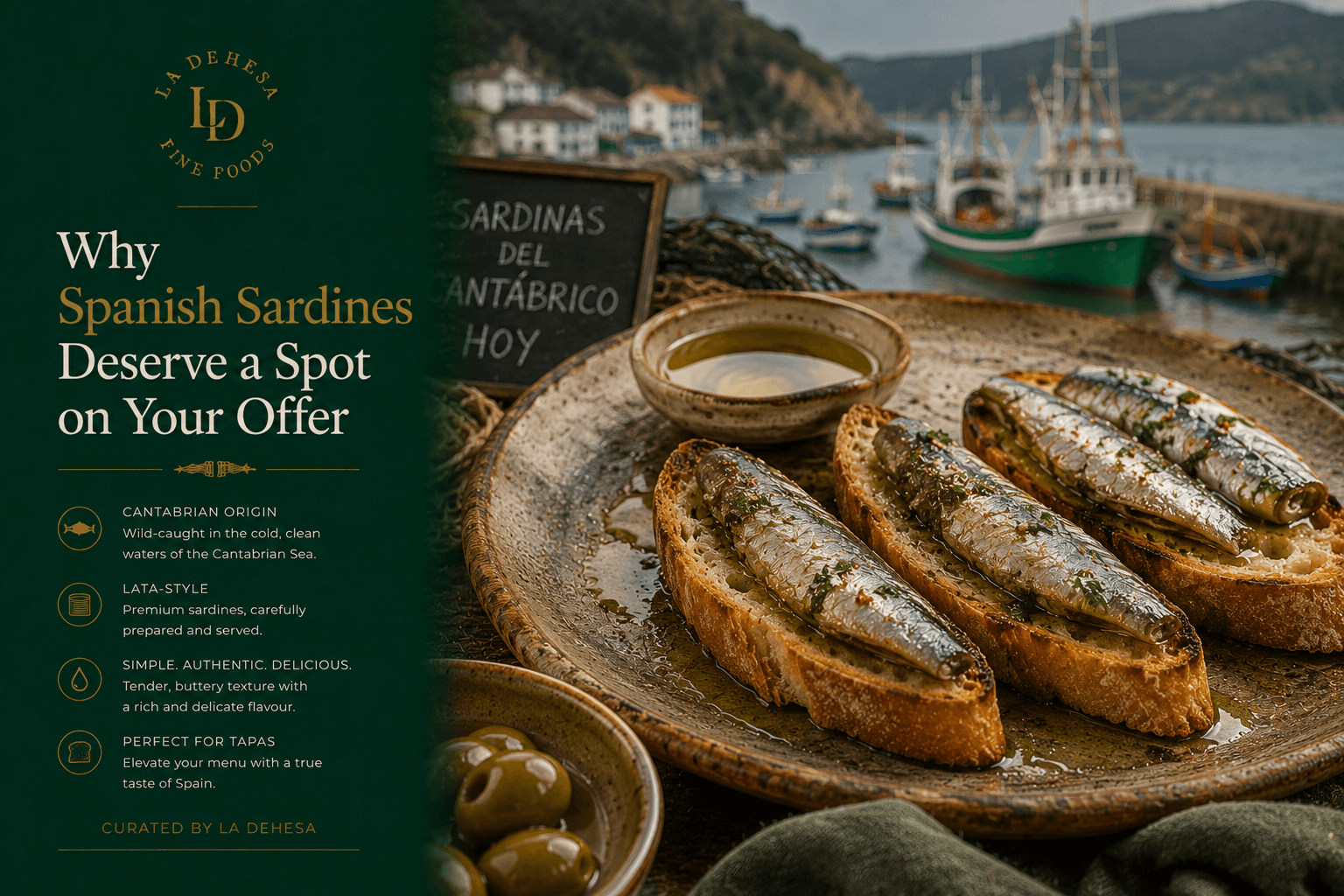
Why Spanish Sardines Deserve a Spot on Your Offer (Irish Chef's Guide)
By Khristian Rueda · 22 June 2026
Anchovies get the glory and the headlines, but the sardine is the conserva that quietly out-earns its place on a menu. It is cheaper to buy than almost any other premium tinned fish, it reads as humble and approachable to a guest, and the best Spanish examples are good enough to be ranked among the finest canned seafood in the world. For an Irish kitchen building a Spanish offer, leaving the sardine off the board is a missed margin and a missed story.
The product is better than its reputation
The sardine has an image problem in Ireland, shaped by cheap supermarket tins in tomato sauce. Premium Spanish sardines are a different category entirely. The best come from the cold Atlantic *rías* of Galicia, the same productive waters that produce the region's celebrated clams and razor clams. They are caught at their seasonal peak, when the fish are at their fattest, and hand-packed in good Spanish olive oil with no preservatives and no additives, just fish, oil, and salt.
There are two formats worth knowing. Full sardinas are the classic plump fillet. Sardinillas, the smaller baby sardines, are petite, delicate, and prized for eating whole. Producers such as Real Conservera Española and Ortiz have built international reputations on these, and Galician hand-packed sardines regularly appear on lists of the world's best tinned seafood.
The detail that sells it: sardines age like wine
Here is the fact that turns a sardine from a cheap snack into a talking point on a tasting menu. Premium conserva sardines improve with age. Held in their olive oil, the fish slowly becomes more tender, smoother, and more refined, much like a wine maturing in bottle. Some houses release vintage-dated tins, and collectors deliberately cellar them for years before opening.
That gives an Irish venue a genuine piece of theatre and a reason to charge for it. A vintage-dated sardine, served with its provenance and its age stated on the menu, is no longer a humble fish. It is a curiosity worth ordering and worth talking about.
Why it earns a place on the offer
Margin.Sardines are among the most affordable premium conservas to buy, yet they plate as a credible small dish. Bought well and served simply, the gap between food cost and menu price is one of the best on a conservas board.
Approachability.Not every guest is ready to order anchovies or razor clams. The sardine is familiar and unintimidating, which makes it an easy entry point onto a Spanish small-plates offer and an easy yes for a cautious table.
Zero labour, full yield.Like all quality conservas, sardines are ambient-stable and plate-ready. Open, dress, serve. No prep, no spoilage clock, no waste.
Range and story.Stocking sardines alongside anchovies, clams, and razor clams completes a proper conservas board and lets you tell the whole Spanish tinned-fish story, from the everyday hero to the aged luxury, in one section of the menu.
How to serve them
The Spanish way is barely-there. Lay the sardines out of the tin, spoon a little of their olive oil back over, add a crack of sea salt and a squeeze of lemon, and serve with good bread. That is a complete dish.
From there: on toasted sourdough with a smear of tomato as a *montadito*; on a board with pickled guindillas and olives; flaked through a potato and egg salad; or simply presented in the open tin, *lata* style, the way Spanish bars serve them, which costs the kitchen nothing and looks the part. For a tasting menu, a single vintage-dated sardinilla with its age noted is a quiet showpiece.
Pairing
Sardines want acidity and bubbles to cut the oil. A crisp Albariño from Rías Baixas matches the Galician origin exactly; a dry Txakoli or even a Cava works beautifully with the richer, oilier fish; and a cold Fino sherry suits the more savoury, tomato-touched preparations. Keep it bright and Atlantic.
The bottom line
The sardine is the value engine of a conservas offer: cheap to buy, easy to sell, simple to plate, and, in its premium and vintage forms, a genuine talking point. It earns its place not in spite of being humble but because of it. Put it on the board next to the anchovies and let the two ends of the category do their different jobs.
---
La Dehesa supplies Origin Verified Galician sardines and the full Spanish conservas range, hand-packed in olive oil and allocated for Irish trade.or message us on for a trade sample. Explore the and the .
Tell us your venue type and receive the current product range.
Browse the full range of Origin Verified Spanish products on the products page, or learn about our sourcing approach on the about page. Find out why Irish hospitality partners choose La Dehesa on why us.
Interested in listing these products at your venue?